

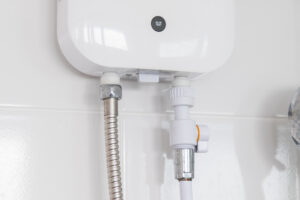
A cold shower when you expect hot water can quickly disrupt your morning routine. For homeowners in San Antonio, TX, water heater problems can also mean higher utility bills, unexpected leaks, and potential water damage. Knowing the early warning signs of a failing water heater can help you address minor issues before they become expensive repairs.
Quick Answer: You may need water heater repair if your hot water runs out faster than usual, temperatures fluctuate, your unit makes unusual noises, or you notice rusty water or moisture around the tank. San Antonio’s mineral-rich water can contribute to sediment buildup that affects water heater performance. While some symptoms have simple explanations, recurring problems, visible leaks, and electrical or gas-related concerns warrant professional attention.
What San Antonio Homeowners Should Know
-
Hard water in the San Antonio area can contribute to mineral deposits inside tank-style water heaters, reducing heating efficiency over time.
-
Homes in neighborhoods such as Alamo Heights and Stone Oak may experience different plumbing challenges depending on the age of their water heaters and plumbing systems.
-
Rumbling, popping, or banging noises can indicate sediment accumulation inside a water heater tank.
-
A sudden loss of hot water does not always mean the entire water heater needs replacement.
-
Addressing leaks and temperature problems early can help limit water damage and unnecessary energy use.
Why Water Heater Problems Matter in San Antonio
Water heater problems matter in San Antonio because mineral-rich water, daily household demand, and equipment age can affect how reliably a system delivers hot water. Recognizing these local factors helps homeowners identify developing issues and determine when professional water heater repair may be necessary.
Much of the region’s water supply comes from sources associated with the Edwards Aquifer. The water naturally contains dissolved minerals, including calcium and magnesium, that contribute to hardness.
When water is heated, some of these minerals can form deposits on heating surfaces and at the bottom of storage tanks. Over time, sediment accumulation may interfere with heat transfer, increase operating noise, and contribute to component wear.
Properties throughout Bexar County, including established neighborhoods such as Terrell Hills and newer residential areas near the city’s northern edge, can experience water heater problems regardless of the home’s age.
At Big City Plumbing, LLC, we understand how disruptive unreliable hot water can be for local households. Our goal is to help homeowners recognize plumbing problems and make informed decisions about the next steps.
Local Water Conditions and Water Heater Performance
San Antonio’s hard water is an important factor to consider when evaluating water heater performance. Mineral deposits can accumulate inside storage tanks and on heating components, especially when equipment operates for years without appropriate maintenance.
San Antonio Water System provides information about local water quality, including hardness. Homeowners can review this information to better understand the mineral content of their water.
Water hardness alone does not prove that a water heater needs repair. However, when reduced hot water capacity, unusual noises, and inconsistent heating occur together, mineral buildup becomes one possible explanation worth investigating.
These conditions make regular water heater inspections and maintenance particularly useful for local property owners.
How Water Heater Problems Affect Your Home
Water heater problems can affect your home by reducing comfort, increasing energy consumption, and creating the possibility of water damage. A malfunctioning system may struggle to meet daily hot water demands or require more energy to maintain the desired temperature.
For families in communities such as Leon Valley and Castle Hills, inconsistent hot water can interfere with showers, laundry, dishwashing, and cleaning.
A leaking water heater presents additional concerns. Even a small leak can damage surrounding flooring, drywall, cabinets, or stored belongings if left unresolved.
The location of the water heater also matters. A unit installed in an interior utility closet may create different water damage risks than one installed in a garage.
7 Warning Signs You Need Water Heater Repair
The clearest warning signs that you need water heater repair include inconsistent temperatures, insufficient hot water, unusual noises, discolored water, leaks, higher energy consumption, and repeated shutdowns. Homeowners in San Antonio should pay particular attention when these symptoms appear suddenly or continue after basic checks.
1. Your Hot Water Runs Out Too Quickly
If your household previously had enough hot water for several showers but now runs out after one, your water heater may not be operating correctly.
Possible causes include sediment accumulation, a failing electric heating element, thermostat problems, or increased household demand.
A professional can help determine whether the issue involves the equipment or changes in how your household uses hot water.
2. Your Water Temperature Keeps Changing
Water that suddenly turns cold or becomes excessively hot can indicate a malfunctioning thermostat, heating element, or temperature-control component.
For tankless systems, inconsistent temperatures may also involve flow-rate limitations or mineral scaling.
Avoid repeatedly raising the temperature setting to compensate. Excessively hot water increases the risk of scalding.
3. You Hear Popping or Rumbling Noises
Popping, rumbling, and knocking noises from a tank-style water heater can develop when sediment collects near the bottom of the tank.
As water heats beneath mineral deposits, the resulting movement and bubbling can create noticeable sounds.
Because hard water is common in the San Antonio region, sediment accumulation is a reasonable possibility to investigate.
4. Your Hot Water Looks Rusty or Discolored
Rust-colored hot water may indicate corrosion inside the water heater or deterioration in the home’s hot water piping.
If discoloration occurs only when using hot water, the water heater or hot water distribution system deserves closer attention.
Discoloration affecting both hot and cold water may point to a broader water supply or plumbing issue.
5. You Notice Water Around the Tank
Moisture around the water heater can indicate a loose connection, leaking valve, condensation, or tank deterioration.
Not every puddle means the storage tank has failed, but water should not be ignored.
If the tank itself is leaking, replacement is generally necessary rather than a conventional repair.
6. Your Energy Bills Increase Unexpectedly
An unexplained increase in electricity or gas consumption can sometimes be associated with water heater inefficiency.
Sediment, malfunctioning components, and excessive heat loss may cause a system to consume more energy.
However, higher utility bills can also result from weather, rate changes, or other household equipment. A professional evaluation can help identify whether the water heater is contributing.
7. Your Water Heater Frequently Shuts Off
Repeated shutdowns or failures to produce hot water may indicate electrical, ignition, sensor, or safety-control problems.
Gas water heaters can experience issues involving pilot assemblies, ignition components, or gas controls. Electric systems may develop problems with heating elements or electrical connections.
Repeatedly resetting a malfunctioning system without identifying the cause is not a reliable long-term solution.
When Should You Call a Professional for Water Heater Repair?
You should call a professional for water heater repair when hot water problems persist, water leaks appear, unusual noises become frequent, or the system repeatedly shuts down. San Antonio homeowners should also request service when they suspect problems involving gas connections, electrical components, or pressure-relief equipment.
Some basic observations are safe for homeowners to make, including checking whether other fixtures have hot water, reviewing accessible thermostat settings, and looking for visible moisture without opening equipment panels.
Professional attention is appropriate when the problem involves internal components or requires specialized testing.
If you smell gas, leave the area immediately and contact your gas utility’s emergency service or 911 from a safe location. Do not operate switches, attempt repairs, or restart the equipment.
If you notice significant leaking, avoid contact with electrical equipment and arrange prompt professional assistance.
Common Causes of Water Heater Problems in San Antonio
Common causes of water heater problems in San Antonio include mineral sediment, aging components, corrosion, faulty temperature controls, and improper system sizing. The area’s hard water can contribute to scaling, while equipment age and household demand influence how quickly performance problems become noticeable.
Mineral and Sediment Buildup
Calcium and magnesium deposits can accumulate inside water heaters as water is heated. This buildup may reduce heating performance and contribute to noise or component deterioration.
Worn Heating Elements or Burners
Electric heating elements can fail, while gas-fired equipment can develop burner or ignition problems. These failures may prevent the system from heating water properly.
Corrosion and Aging Components
Storage water heaters contain components intended to help manage corrosion, including sacrificial anode rods in many models.
As equipment ages, deterioration can increase the likelihood of leaks and internal damage.
Faulty Thermostats and Controls
Temperature-control failures can cause inconsistent heating, insufficient hot water, or unsafe temperatures.
Incorrect Capacity or Increased Demand
A water heater that once served a household adequately may struggle after additional occupants, bathroom renovations, or changes in daily routines.
In this situation, repair alone may not resolve the underlying capacity problem.
How to Prevent Water Heater Problems
Preventing water heater problems in San Antonio starts with routine inspections, appropriate maintenance, and early attention to changing performance. Because mineral buildup is a regional concern, homeowners should follow manufacturer recommendations for flushing, descaling, and checking components that help protect against corrosion.
Consider these maintenance practices:
-
Check around the water heater periodically for moisture, corrosion, or unusual sounds.
-
Monitor changes in hot water temperature and how long the supply lasts.
-
Arrange tank flushing or tankless descaling when appropriate for the equipment and water conditions.
-
Have the anode rod inspected according to manufacturer recommendations.
-
Keep the area around the water heater accessible and free of stored items that interfere with required clearances.
-
Review the water heater’s condition before periods of increased household demand.
Fall can be a convenient time for local homeowners to schedule maintenance before cooler weather increases their reliance on hot water.
Do not remove electrical covers, disconnect gas components, or operate unfamiliar valves as part of a do-it-yourself inspection.
What to Expect From Professional Water Heater Repair
Professional water heater repair should identify the cause of the problem and determine whether the affected component can be repaired safely. Depending on the findings, service may restore reliable heating, improve performance, address a leak, or reveal that replacement is the more practical option.
A typical evaluation may involve checking visible plumbing connections, temperature settings, heating components, safety devices, and the overall condition of the unit.
For a tankless water heater, an inspection may also involve checking for scaling, error codes, flow-related problems, and ignition or electrical faults.
Results depend on the system’s age, condition, and the specific failure. Not every water heater problem can be resolved through maintenance or component replacement.
Common Water Heater Repair Mistakes to Avoid
Common water heater repair mistakes include ignoring minor leaks, adjusting temperature settings without diagnosing the problem, and attempting repairs involving gas or electrical components. These approaches can allow underlying issues to continue and may create additional safety or property damage risks.
Mistake: Ignoring popping noises. Sediment-related noise may become more noticeable as deposits accumulate. A better approach is to have persistent noises evaluated before performance declines further.
Mistake: Assuming rusty water always means a failed tank. Discoloration may originate from plumbing pipes or other sources. Check whether the issue affects hot water only and arrange an appropriate inspection.
Mistake: Repeatedly resetting the water heater. This may temporarily restore operation without addressing the failure. Have recurring shutdowns diagnosed.
Mistake: Waiting until a leak becomes severe. Even a small leak can cause damage over time. Identify the source promptly and arrange service when necessary.
Common Local Scenario: A Water Heater Losing Capacity
A common water heater scenario in San Antonio involves a household noticing that its hot water supply gradually becomes less reliable. Showers that once stayed warm begin turning cold sooner, and the storage tank starts making popping sounds.
In a home with mineral-rich water, sediment buildup may be contributing to these symptoms.
However, a failing heating element, thermostat problem, or increased hot water demand could produce similar complaints.
A professional inspection helps distinguish between these possibilities and determine whether maintenance, repair, or replacement is appropriate.
This is an illustrative local scenario, not a documented customer project.
Water Heater Services That Can Help
Water heater services that can help San Antonio homeowners include diagnostic inspections, component repairs, sediment-related maintenance, and equipment replacement. The right service depends on whether the problem involves heating performance, water leakage, corrosion, or the system’s overall condition.
At Big City Plumbing, LLC, we encourage homeowners to address warning signs before unreliable hot water becomes a larger disruption.
A proper assessment can help clarify which solution fits the equipment’s condition and the household’s needs.
Water Heater Repair vs. Replacement: Which Is Better?
Water heater repair is often the better choice when a relatively healthy unit has a specific, repairable component failure. Replacement becomes more practical when the tank leaks, corrosion is extensive, breakdowns are recurring, or repair costs are high relative to the remaining useful life of the equipment.
| Consideration | Repair | Replacement |
|---|---|---|
| Equipment condition | Generally sound | Significant deterioration |
| Type of problem | Isolated component failure | Leaking tank or major damage |
| Initial expense | Often lower | Usually higher |
| Long-term reliability | Depends on overall condition | New equipment starts with new components |
| Efficiency | May restore existing performance | May offer improved efficiency |
| Best next step | Diagnose the failure | Evaluate sizing and equipment options |
A water heater’s age is useful context, but it should not be the only deciding factor. Maintenance history, tank condition, repair cost, and expected future performance also matter.
Water Heater Concerns Across San Antonio and Nearby Communities
Water heater concerns affect homeowners throughout San Antonio and surrounding Bexar County communities, including Alamo Heights, Leon Valley, Castle Hills, and Terrell Hills. Property age, plumbing design, water conditions, and household demand all influence the types of problems residents may encounter.
Whether a home has a traditional storage tank or a tankless system, timely diagnosis helps property owners choose an appropriate solution.
The Cost of Ignoring Water Heater Problems
Ignoring water heater problems can lead to worsening performance, additional component damage, unnecessary energy consumption, and water damage. For local homeowners, delaying service may turn a manageable heating issue into a more disruptive plumbing problem.
A deteriorating connection can continue leaking, while sediment accumulation may contribute to reduced heating efficiency.
Waiting also creates the possibility of losing hot water at an inconvenient time.
Addressing problems early does not guarantee that replacement can be avoided, but it provides an opportunity to evaluate the system before conditions worsen.
Frequently Asked Questions About Water Heater Repair in San Antonio
How do I know if my water heater needs repair in San Antonio, TX?
Your water heater may need repair if it produces inconsistent temperatures, runs out of hot water unexpectedly, makes unusual noises, or develops leaks. San Antonio’s hard water can contribute to mineral buildup, but several mechanical issues can produce similar symptoms. A professional inspection helps identify the actual cause.
Can San Antonio’s hard water damage my water heater?
Yes, San Antonio’s hard water can contribute to mineral deposits inside water heaters. Over time, scaling and sediment accumulation may interfere with heating performance and contribute to component wear. Appropriate maintenance, including flushing or descaling when recommended by the manufacturer, can help manage these conditions.
Why does my water heater make popping noises?
Popping noises often occur when water heats beneath sediment deposits inside a storage tank. Mineral-rich water in the Bexar County area can contribute to this buildup. Persistent noises should be evaluated because other equipment problems can also produce unusual sounds, and sediment accumulation may affect heating performance.
Is it worth repairing an older water heater?
Repairing an older water heater can be worthwhile if the tank remains in good condition and the problem involves an affordable, replaceable component. However, recurring failures, substantial corrosion, or a leaking tank may make replacement more practical. Compare repair costs with the equipment’s condition and expected remaining service life.
How often should water heaters be maintained in San Antonio?
Water heaters should be maintained according to the manufacturer’s instructions and the property’s water conditions. Annual professional inspections are a reasonable planning approach for many households, while flushing and descaling frequency may vary. San Antonio’s mineral-rich water makes it especially useful to monitor sediment-related performance changes.
What should I do if my water heater is leaking?
If your water heater is leaking, avoid electrical hazards and arrange prompt professional evaluation. If it is safe and you know the correct procedure, follow the manufacturer’s instructions for shutting down the equipment and isolating the water supply. A leaking connection may be repairable, but a leaking storage tank generally requires replacement.
Can a water heater stop working suddenly during winter in San Antonio?
Yes, a water heater can stop working suddenly during winter or any other season. Colder incoming water may increase heating demand, while existing component problems can become more noticeable. Occasional freezing weather in South Central Texas can also threaten exposed plumbing, making appropriate pipe protection and maintenance worthwhile.
How long does water heater repair usually take?
Water heater repair time depends on the problem, equipment accessibility, and availability of replacement components. Some isolated component repairs may be completed during one service visit, while complex problems or specialized parts can require additional time. An inspection is usually necessary before a reliable repair timeline can be provided.
Should I repair or replace a tankless water heater?
A tankless water heater may be worth repairing when the problem involves mineral scaling, a serviceable sensor, or another replaceable component. Replacement may be more appropriate when major components fail or repair costs become excessive. In San Antonio, evaluating mineral buildup and maintenance history is especially useful when making this decision.
Restore Reliable Hot Water in Your San Antonio Home
Recognizing the warning signs of water heater trouble can help you protect your home, reduce unnecessary disruption, and make informed repair decisions. From sediment-related noises to unexpected leaks, early attention gives you more options for addressing the problem.
Get Your Hot Water Working Reliably Again
Big City Plumbing, LLC is here to help you take the next step toward dependable hot water and greater peace of mind.