
If you’ve ever stood in the shower watching water pool around your feet, or noticed your kitchen sink taking forever to drain after washing dishes, you already know how frustrating slow drains can be. For homeowners in San Antonio, TX, this is one of the most common plumbing complaints we hear. The good news is that slow drains rarely come out of nowhere. There are identifiable, fixable reasons behind them, and understanding those reasons is the first step toward getting your plumbing back in working order.
This breakdown covers the most common causes of plumbing drain problems in San Antonio, what you can do about them, and when it’s time to call in a professional.
The Most Common Causes of Slow Drains in San Antonio, TX
When homeowners search for answers to why are my drains slow in san antonio, tx, common causes tend to fall into a few predictable categories. Most slow drain issues don’t start as major problems. They build up gradually over weeks or months until the drainage becomes noticeably sluggish.
In kitchen sinks, grease and food debris are usually the biggest culprits. Every time you rinse a greasy pan or wash food scraps down the drain, a small amount of residue clings to the inside of your pipes. Over time, that residue accumulates into thick blockages that restrict water flow significantly. In bathroom drains, the story is a little different. Hair, soap scum, and toothpaste buildup are typically responsible. A single shower can send a surprising amount of hair and soap residue down the drain, and that material sticks together inside the pipe, forming clogs that grow larger with every use.
Toilet drains face their own set of challenges. Flushing anything other than waste and toilet paper, including wipes labeled as “flushable,” can create stubborn blockages deep inside the drain line. These partial clogs often cause slow flushing before they eventually lead to a full backup.
How San Antonio’s Water Quality and Soil Affect Your Pipes
One factor that many homeowners overlook when dealing with clogged pipes solutions is the local environment itself. San Antonio sits in a region with hard water, meaning the tap water contains elevated levels of calcium and magnesium minerals. Over time, these minerals deposit themselves on the inner walls of pipes in a process called scaling. As the scale builds up, the diameter of the pipe effectively shrinks, and water has less room to flow through efficiently.
The soil composition in and around San Antonio also plays a role. The area is known for its expansive clay soils, which shift and swell depending on moisture levels. These soil movements can place stress on underground drain lines, causing them to shift slightly out of alignment or even crack. A cracked or misaligned pipe doesn’t just drain slowly. It can also allow soil and debris to enter the line, creating obstructions that worsen over time.
Tree root intrusion is another concern in many San Antonio neighborhoods, particularly in older areas with mature landscaping. Tree roots naturally seek out sources of moisture, and a small crack or loose joint in a sewer line is an open invitation. Once roots get inside a pipe, they spread and branch out, eventually creating a dense mass that catches debris and causes severe slowdowns or complete blockages.
Warning Signs You Shouldn’t Ignore
Not every slow drain announces itself dramatically. In many cases, the warning signs are subtle at first, and homeowners chalk them up to minor inconveniences rather than plumbing drain problems in san antonio that deserve attention. Knowing what to look for can help you catch issues before they become expensive repairs.
If multiple drains in your home are slow at the same time, that’s a red flag. Individual clogs typically affect one fixture at a time. When several drains slow down simultaneously, it usually points to a problem deeper in the main drain line or sewer system rather than a localized clog near the fixture.
Gurgling sounds coming from your drains or toilet are another warning sign worth taking seriously. Those sounds happen when air is trapped in the drain system due to a partial blockage. The gurgling is the sound of air bubbles forcing their way through the obstruction. Similarly, if you notice water backing up into a nearby fixture when you use another one, such as water appearing in your bathtub when you flush the toilet, you likely have a significant blockage in a shared drain line.
Foul odors coming from drains can also signal a problem. A persistent sewer smell often means that the drain isn’t clearing waste efficiently, allowing buildup to sit inside the pipe and decompose. In some cases, it can also indicate a more serious sewer line issue that requires immediate attention.
Why a Professional Drain Inspection in San Antonio Makes Sense
Some homeowners try to handle slow drains with store-bought chemical drain cleaners. While these products can provide temporary relief for minor surface clogs, they rarely address the root cause of the problem, and repeated use can actually damage certain types of pipes over time. For anything more than a simple hair clog near the surface of a drain, a professional approach is almost always more effective and more cost-efficient in the long run.
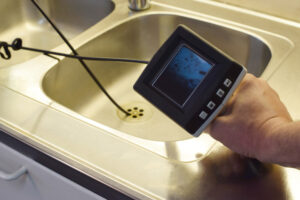
This is where a professional drain inspection in san antonio, sewer camera service comes into play. A sewer camera inspection involves inserting a flexible, waterproof camera into your drain line so a plumber can see exactly what’s happening inside the pipe. There’s no guesswork involved. The camera provides real-time video footage that reveals the precise location and nature of the blockage, whether it’s a grease buildup, a root intrusion, a collapsed section of pipe, or a mineral scaling issue.
With that information in hand, a plumber can recommend the most targeted and effective solution. For grease and debris clogs, hydro jetting is often the best option. This technique uses a high-pressure stream of water to scour the inside of the pipe clean, removing buildup far more thoroughly than a standard drain snake. For root intrusions, mechanical cutting tools can clear the roots, though the underlying pipe damage may also need to be addressed to prevent the problem from returning quickly.
Sewer camera service is also valuable as a preventative tool. If you’re buying a home in San Antonio, having the sewer line inspected before closing can save you from inheriting a costly problem. Similarly, older homes with cast iron or clay sewer pipes can benefit from periodic camera inspections to catch deterioration before it leads to a full pipe failure.
When to Call a Plumber in San Antonio, TX
Knowing when to call a plumber is just as important as understanding what’s causing your slow drains. If a plunger or basic drain cleaning doesn’t resolve the issue within a day or two, it’s time to bring in a professional. You should also call a plumber right away if you notice sewage odors inside your home, if multiple drains are backing up at the same time, or if you see water damage near your floor drains or under sinks.
San Antonio homeowners dealing with recurring slow drains should resist the urge to keep applying temporary fixes. Each time a partial clog is cleared without addressing the underlying cause, the problem is likely to return sooner and in worse condition. A licensed plumber with experience in the local area will understand the specific challenges that come with San Antonio’s water quality, soil conditions, and common pipe materials, and can offer solutions that hold up over time.
Conclusion
Slow drains in San Antonio, TX are rarely just a minor annoyance. They’re often early signals of deeper plumbing issues that will only worsen without proper attention. Whether the cause is grease buildup, hard water scaling, tree root intrusion, or a shifting sewer line, the right diagnosis makes all the difference. A professional drain inspection backed by sewer camera technology takes the guesswork out of the process and helps you get to a real, lasting solution as quickly as possible.